With great pleasure, we will explore the intriguing topic related to 2025 Board Exams: A Comprehensive Overview. Let’s weave interesting information and offer fresh perspectives to the readers.
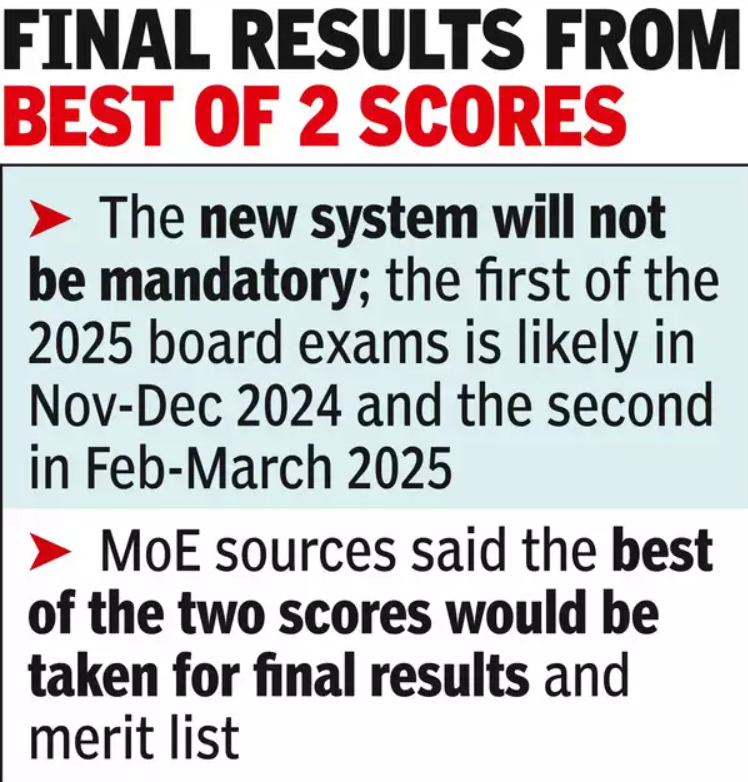
The Central Board of Secondary Education (CBSE) has announced significant changes to its board exams for the 2025 academic year. These revisions aim to enhance the assessment process, promote critical thinking skills, and prepare students for higher education and the workforce. This comprehensive overview explores the key features, objectives, and implications of the 2025 board exams.
The 2025 board exams will shift from a traditional knowledge-based approach to a competency-based assessment model. This means that students will be evaluated not only on their factual knowledge but also on their ability to apply concepts, analyze information, and solve problems.
To assess students’ competencies effectively, the exams will incorporate a wide range of question types. These include multiple-choice questions (MCQs), short answer questions, long answer questions, and project-based assignments.
Open-ended questions will play a significant role in the exams, allowing students to demonstrate their critical thinking skills, problem-solving abilities, and creativity. These questions will require students to analyze, interpret, and communicate their ideas clearly.
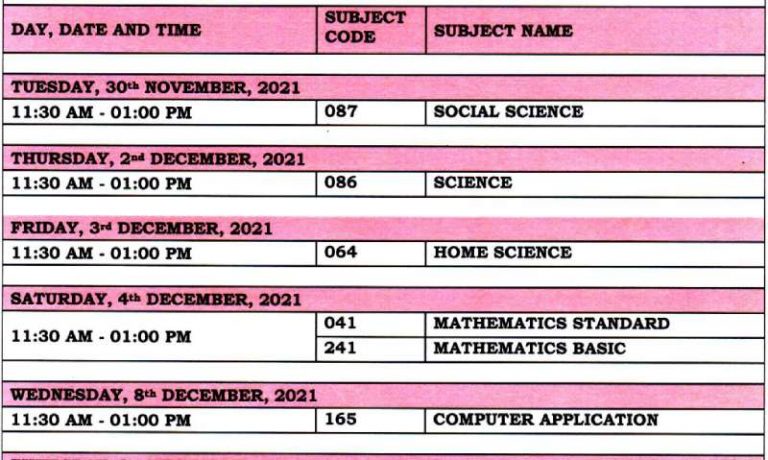
Project-based assignments will be introduced to assess students’ ability to work independently, research, and apply their knowledge to real-world problems. These assignments will help students develop essential skills such as collaboration, project management, and presentation skills.

The competency-based assessment model is intended to promote deeper understanding and critical thinking skills. By focusing on students’ ability to apply knowledge, the exams aim to enhance their learning outcomes and prepare them for higher-level studies and careers.
The incorporation of open-ended questions and project-based assignments will discourage rote learning and encourage students to develop a deeper understanding of concepts. These question types will require students to think critically and apply their knowledge in various contexts.
The exams will emphasize problem-solving abilities, equipping students with the skills necessary to address complex challenges in their academic and professional lives. The focus on application and analysis will foster students’ ability to think independently and find solutions.
The 2025 board exams are aligned with the requirements of higher education institutions and the workforce. By assessing competencies that are valued in these settings, the exams prepare students for the transition to the next phase of their academic and professional journeys.
The 2025 board exams have significant implications for students, educators, and the education system as a whole:
Students need to be adequately prepared for the competency-based assessment model. They should focus on developing their critical thinking skills, problem-solving abilities, and ability to apply concepts to real-world situations.
Educators need to be trained on the new assessment format and teaching methodologies required to prepare students for the competency-based exams. They should adopt teaching strategies that emphasize critical thinking, problem-solving, and hands-on learning.
The curriculum may need to be revised to align with the competency-based assessment model. The focus should be on developing students’ competencies rather than simply covering content.
The assessment system may undergo reforms to ensure that it aligns with the competency-based approach. This may include changes to marking schemes and grading criteria to reflect the emphasis on critical thinking and problem-solving.
The 2025 board exams represent a major shift in the assessment process, moving towards a competency-based model that emphasizes critical thinking, problem-solving, and application of knowledge. By aligning with the requirements of higher education and the workforce, these exams aim to prepare students for success in their future endeavors. While the changes may require adjustments from students, educators, and the education system, they ultimately strive to enhance learning outcomes and prepare students for the challenges of the 21st century.


Thus, we hope this article has provided valuable insights into 2025 Board Exams: A Comprehensive Overview. We thank you for taking the time to read this article. See you in our next article!